Stop Guessing What Your Subscribers Want: How Zero-Party Data Changes the Email Game.

The digital marketing landscape is currently undergoing a fundamental transformation as traditional methods of tracking consumer behavior become increasingly obsolete. For years, e-commerce brands relied heavily on third-party cookies and behavioral inference to target their audiences. However, the rise of stringent privacy regulations and technological shifts—most notably Apple’s App Tracking Transparency (ATT) and Google’s phased retirement of third-party cookies—has created a "data gap" that is forcing marketers to rethink their strategies. In this environment, zero-party data has emerged not just as a buzzword, but as the primary mechanism for building durable, high-conversion email marketing programs.
Zero-party data, a term originally coined by Forrester Research, refers to information that a customer intentionally and proactively shares with a brand. This differs significantly from first-party data, which involves observing a user’s behavior (such as clicks or purchase history) to guess their intentions. While first-party data tells a brand what a customer did, zero-party data tells the brand why they did it and what they intend to do next. By moving from a model of surveillance to one of conversation, brands are finding they can achieve higher levels of personalization while fostering deeper consumer trust.
The Evolution of Consumer Data: From Tracking to Transparency
To understand the significance of zero-party data, one must examine the chronological shift in digital advertising. In the early 2010s, the "Golden Age" of tracking allowed brands to follow users across the web using third-party cookies. This enabled hyper-targeted ads but often felt invasive to the consumer. The tide began to turn in 2018 with the implementation of the General Data Protection Regulation (GDPR) in Europe, followed by the California Consumer Privacy Act (CCPA) in the United States.
The most disruptive change arrived in 2021 with Apple’s iOS 14.5 update, which required apps to ask for permission before tracking user data. According to industry reports, nearly 60% of users opted out of tracking when prompted, effectively blinding marketers who relied on Facebook and Google’s algorithmic targeting. This created a crisis in customer acquisition costs (CAC), which skyrocketed as targeting became less efficient.
In response, the industry has pivoted toward "owned" channels like email and SMS. However, even within these channels, the old method of "batch and blast"—sending the same generic email to an entire list—has proven ineffective. Modern consumers expect relevance. A study by Epsilon indicated that 80% of consumers are more likely to make a purchase from a brand that provides personalized experiences. Zero-party data is the fuel for that personalization.
Strategic Collection: Quizzes as a Value Exchange
The most effective method for collecting zero-party data is the interactive quiz. Unlike a static lead-generation form, a quiz offers an immediate value exchange. The customer provides information about their preferences, challenges, or budget, and in return, they receive a tailored recommendation or a personalized discount.
In the skincare industry, for example, a brand might traditionally segment its list by "recent purchasers of moisturizer." This segment, however, is a monolith that hides three distinct personas: the customer with dry skin seeking hydration, the customer buying a gift for a spouse, and the customer managing a specific condition like rosacea. A pre-purchase quiz allows the brand to identify these personas before a single dollar is spent.
Data from e-commerce platforms suggests that quizzes can increase email opt-in rates by up to 50% compared to standard "10% off" pop-ups. The key to success lies in the mapping of data. Every answer provided in a quiz must be mapped to a specific tag or custom property within an Email Service Provider (ESP). This allows for the immediate triggering of a "Welcome Flow" that is uniquely tailored to the individual. If a user identifies as a "beginner" in a fitness quiz, they receive educational content; if they identify as an "expert," they receive high-performance product recommendations.
Filling the Gaps: Post-Purchase Surveys and Preference Centers
While quizzes are ideal for top-of-the-funnel acquisition, zero-party data collection must continue throughout the customer lifecycle. Post-purchase surveys, typically sent 24 to 48 hours after a product is delivered, provide insights that behavioral data cannot capture.
A significant portion of e-commerce purchases are made for others. Behavioral data might show a male customer purchasing high-end women’s supplements, leading an algorithm to mistakenly target him with women’s health content for the next six months. A simple one-question post-purchase survey—"Was this a gift or for you?"—corrects this trajectory. If it was a gift, the brand can pivot its strategy to "Gifting Occasions" (e.g., Mother’s Day or anniversaries) rather than daily health tips, thereby reducing the likelihood of an unsubscribe.
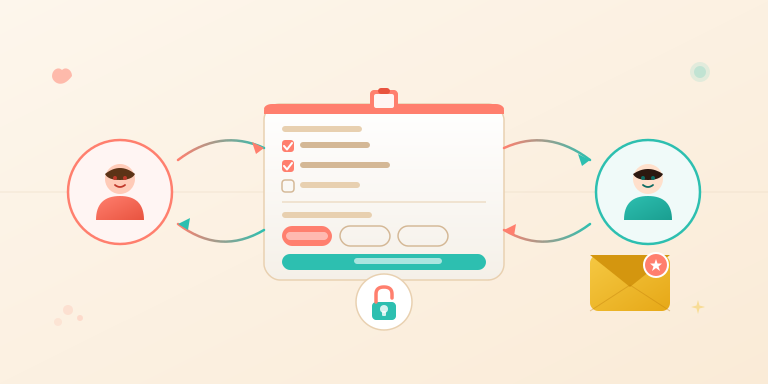
Furthermore, the "Preference Center" is becoming a critical tool for retention. Traditionally, the only option for a dissatisfied subscriber was to "Unsubscribe." Modern preference centers offer a middle ground, allowing users to select the frequency of emails (e.g., "Once a week" vs. "Daily") or the topics they are interested in. This level of control builds brand equity. When a subscriber manages their preferences, they are signaling a desire to maintain the relationship, provided the brand respects their boundaries.
The Technical Infrastructure of Personalization
The challenge for many founders and marketing teams is not the collection of data, but the utilization of it. Data that sits in a spreadsheet is useless; it must be actionable at scale. This requires an integrated tech stack where the data collection tool (like a quiz app or survey builder) communicates seamlessly with the ESP.
Platforms such as Omnisend have developed specific features to handle this influx of subscriber-level data. Through the use of custom properties and dynamic segmentation, marketers can build automated flows that change in real-time based on the data provided. For instance, if a subscriber updates their preference from "running" to "cycling," the next automated newsletter can dynamically swap out product blocks to reflect that change without manual intervention from the marketing team.
Recent data indicates that segmented campaigns driven by zero-party data see a 20-30% higher open rate and a significantly higher click-through rate compared to non-segmented broadcasts. This is because the email stops being an advertisement and starts being a service.
Broader Implications and the Future of Digital Trust
The shift toward zero-party data represents a broader move toward "permission-based marketing." In an era of deepfakes, data breaches, and AI-generated noise, authenticity is becoming a premium commodity. By asking for data rather than stealing it, brands demonstrate a level of respect for the consumer that is increasingly rare.
There is also a significant economic implication. As SMS and email costs fluctuate, the efficiency of each send becomes paramount. Sending 10,000 highly relevant emails is more cost-effective than sending 100,000 generic ones, especially when considering the "hidden costs" of high unsubscribe rates and poor sender reputation. Industry analysis suggests that brands utilizing zero-party data can reduce their SMS marketing costs by up to 35% by eliminating "wasteful" sends to uninterested segments.
As artificial intelligence continues to evolve, the quality of the data fed into AI models will determine the success of a brand’s automation. AI can predict behavior, but it functions best when it has a foundation of "ground truth" provided by the customer. Zero-party data provides that truth.
Conclusion: The Path Forward for E-commerce Leaders
The era of guessing what subscribers want is effectively over. The brands that will dominate the market over the next decade are those that view their email list not as a database of addresses, but as a collection of individual relationships.
Implementing a zero-party data strategy requires three distinct steps:
- Deployment: Using quizzes and surveys to invite customers to share their needs.
- Integration: Ensuring that data flows directly into the marketing automation platform as custom properties.
- Activation: Building segmented flows and dynamic content that prove to the customer their voice was heard.
The transition from third-party tracking to zero-party engagement is more than a technical adjustment; it is a cultural shift in how businesses interact with the public. By prioritizing transparency and value, marketers can build email programs that are not only more profitable but also more resilient to the inevitable changes in the digital regulatory environment. The goal is no longer to "track" the customer, but to listen to them. Those who listen best will ultimately win the inbox.